Should You Leave Mulch After Land Clearing?
Wondering if you should leave tree mulch after land clearing? Learn the pros, cons, erosion control benefits, and when it’s worth hauling debris away.
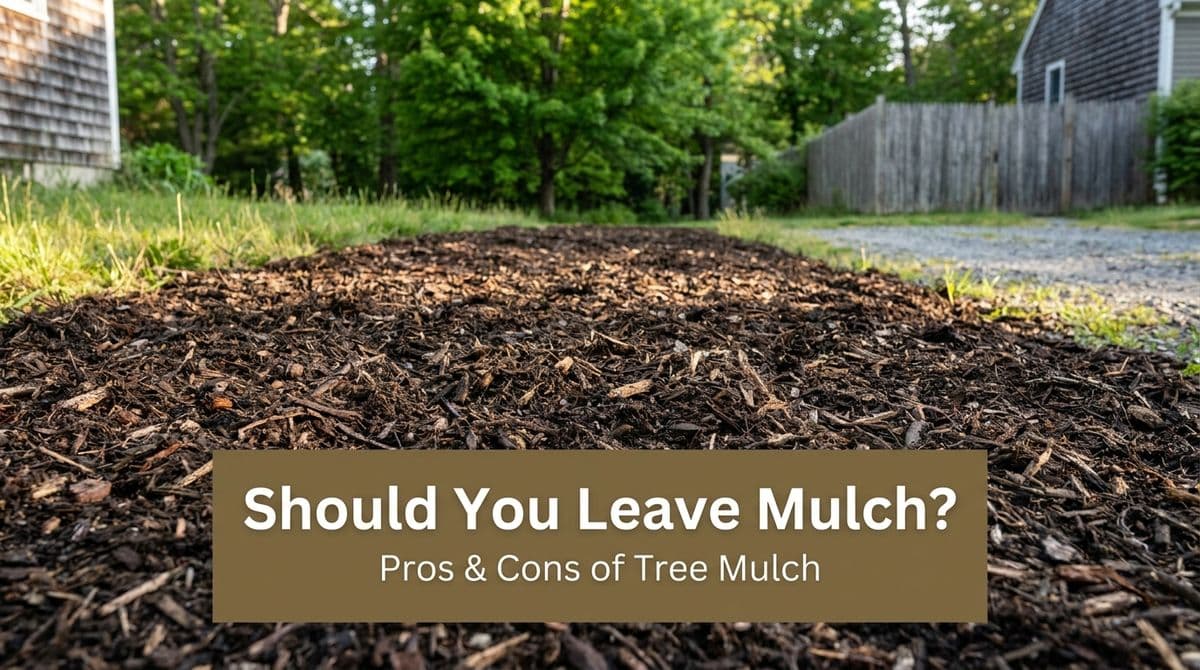
Should You Leave Tree Mulch After Land Clearing?
We recently got a call from a customer — let’s call her Linda — who was helping her mom clear out an overgrown backyard. We’d walked the property, looked at the thick brush and small trees along the back fence, and sent over our estimate. When Linda read the terms, she called back with the big question we hear all the time:
“Are you hauling all that stuff off… or are you just going to mulch it and leave it in the yard?”
Her mom was picturing a totally bare, cleaned-off slope. In our proposal, we recommended mulching and leaving the material on-site. That led to a great conversation about erosion, weeds, fire risk, and when it actually makes sense to pay extra to have debris hauled away.
If you’re about to clear trees or brush on your property, here’s the same guidance we gave Linda, just in a little more detail.
How Modern Land Clearing Mulching Works
On jobs like Linda’s, we typically bring in a skid steer with a forestry mulcher/shredder attachment. Instead of cutting everything down and stacking it in piles, the machine:
- Grinds small trees, branches, and shrubs into coarse mulch
- Leaves it spread across the ground as a blanket
- Opens up the area without disturbing the soil as much as heavy dozers do
From the homeowner’s side, it can feel like, “Wait, I’m paying to clear this… why are you leaving all this shredded stuff?” But that mulch is actually doing some important work for your property.
Pros of Leaving Tree Mulch After Clearing
1. Erosion Control & Runoff Protection
This was the main reason we recommended leaving the mulch for Linda’s mom. When you clear a wooded or brushy area and leave bare dirt, you invite:
- Rain washing soil downhill
- Gullies forming on slopes
- Muddy runoff toward patios, fences, or neighboring yards
A 2–4 inch layer of shredded wood acts like a natural erosion blanket. It slows down rain impact, helps water soak in instead of washing off, and holds the topsoil in place while roots and groundcover recover.
2. Soil Health & Long-Term Improvement
Over time, that mulch breaks down and feeds the soil. As it decomposes, it:
- Adds organic matter and improves soil structure
- Helps the ground hold moisture more evenly
- Supports beneficial organisms in the soil
For a lot of back-property areas — behind fences, along tree lines, in easements — leaving mulch is a simple way to turn tired, compacted dirt into much healthier soil without bringing in topsoil or compost.
3. Weed Suppression (With Some Limits)
Linda also asked about weeds coming back. Mulch won’t magically sterilize your soil, but a good layer will:
- Smother many existing weeds by blocking sunlight
- Reduce the number of new seeds that can successfully sprout
- Make it easier to keep up with the few that do pop through
We told her what we tell most customers: if you’d like to go a step further, we can spray a weed control treatment before or after mulching, or you can handle that yourself with a product you’re comfortable with. Some neighbors prefer a more natural, chemical-free approach; others say, “Let’s kill it and be done.” We can work either way.
Cons and Concerns: When Mulch Might Not Be Ideal
1. Appearance & Usability Right Away
Freshly mulched clearing areas look natural and rustic, not like a finished lawn. If your plan is to:
- Lay sod immediately
- Install a patio or play area next month
- Create a very clean, landscaped look
then we may recommend hauling some or all of the debris away and bringing in topsoil or grading more tightly. Mulch is great for stabilizing, but it’s not a final finish surface.
2. Fire Hazard Questions
Linda asked something we hear a lot: “Is that mulch going to be a fire hazard?”
In our climate, with typical backyard widths and normal rainfall, a mulch layer is no more of a fire risk than the brush and leaves that were there to begin with. It will dry out on top, but we’re usually going into wetter weather and haven’t had issues on similar properties.
That said, if you live in a wildfire-prone area, have a steep, dry slope, or need to maintain a strict defensible space around structures, we can adjust by:
- Leaving a thinner mulch layer
- Keeping mulch pulled back a few feet from structures
- Hauling away the bulk of the material nearest the house
When It Makes Sense to Haul Debris Away
There are definitely times when paying extra for debris removal is the right call. We typically recommend hauling at least some material away when:
- You want a very clean, manicured look right after clearing
- The area will be used immediately for recreation, a garden, or structures
- There is far more material than is reasonable to leave on the ground
- Access allows us to bring in a dump trailer without damaging lawns or driveways
Hauling costs more simply because it involves additional equipment, labor, and disposal fees. That’s why, for properties like Linda’s mom’s back easement, we usually recommend starting by leaving the mulch. If, after seeing it in person, the homeowner hates the look, we can always come back later to remove or redistribute material.
Adding Weed Control: Spray or No Spray?
At the end of our call, Linda asked what she could spray to prevent regrowth. Here’s the basic breakdown we walk homeowners through:
- Chemical option: A selective or non-selective herbicide applied after clearing can dramatically cut down on regrowth for a season or more. This is more “set it and forget it,” but not everyone is comfortable with chemicals.
- Natural option: Rely on the mulch layer, hand-pull any tough repeat offenders, and mow or trim new sprouts regularly to exhaust their energy.
We do have commercial sprayers and can handle this for you if you’d like it done professionally, or we can recommend a DIY approach depending on your preferences and local regulations.
How to Decide What’s Right for Your Property
If you’re on the fence about leaving mulch after land clearing, ask yourself:
- Is this a finished yard space or more of a back, natural area?
- Is erosion a concern on slopes or near structures?
- What’s my timeline to plant grass, build, or landscape?
- What’s my comfort level with a natural look vs. “picture perfect” right away?
In many cases, we’ll recommend what we suggested to Linda’s family: mulch now for erosion control and soil health, live with it for a season, and then decide if you want to thin it out, haul some away, or move on to the next phase of landscaping.
If you’re considering a clearing project and aren’t sure whether to leave mulch or remove it, we’re happy to walk your property, talk through your goals, and put together a plan that balances looks, budget, and long-term health of your land.