- Home
- Projects
- Retaining Wall, Gravel Driveway, Culvert and Creek Rip Rap on One Parker County Property
Retaining Wall, Gravel Driveway, Culvert and Creek Rip Rap on One Parker County Property
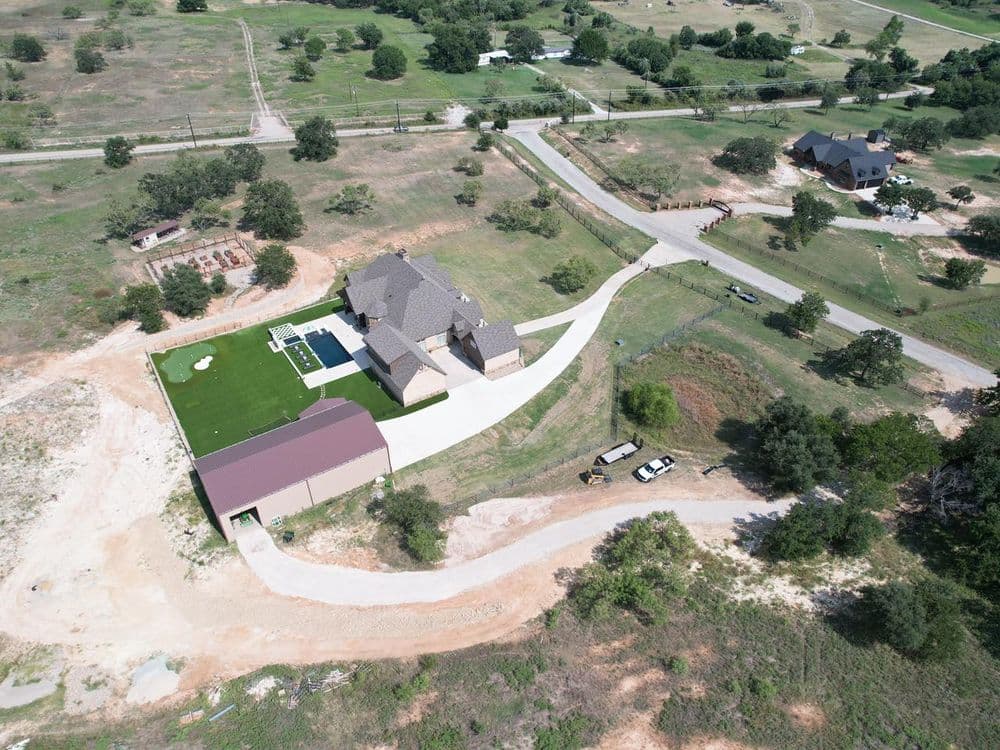
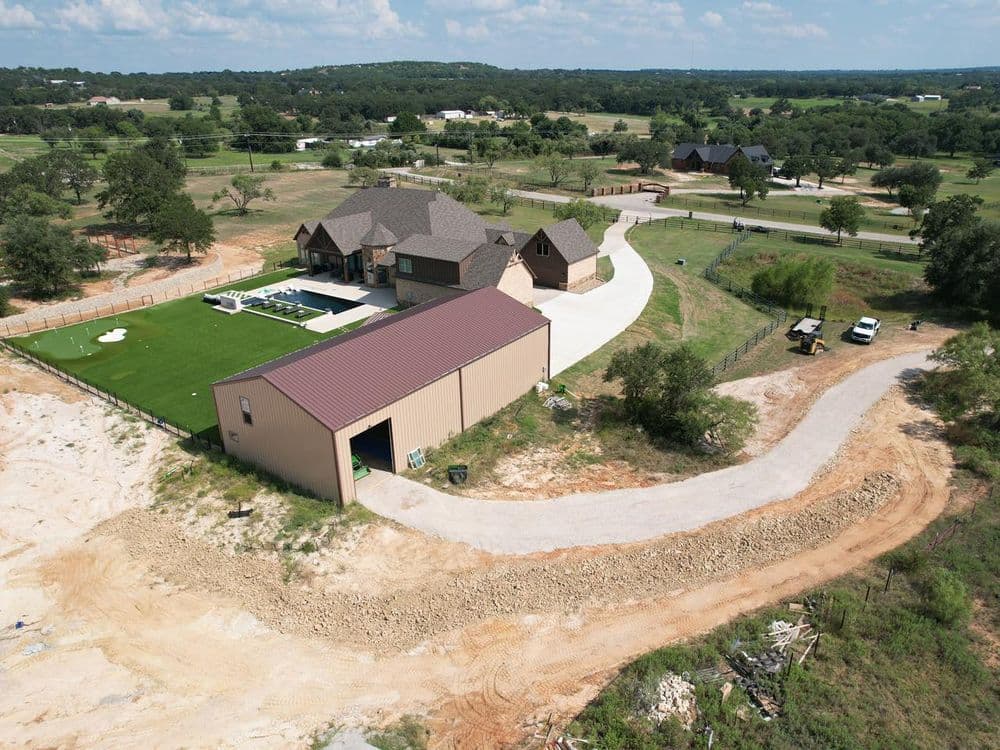
This was our biggest job to date - and it was a serious one. One property. Four major scopes of work. All of it had to be done right the first time because there was no room for shortcuts on a site this complex.
Here's what we were working with: sandy soil that eats driveways alive, a creek eating away at its banks, a drainage problem at the entrance, and a grade change that needed a real retaining wall - not just a low stack of rock. The customer needed solutions that would hold up for decades, not just look good in photos.
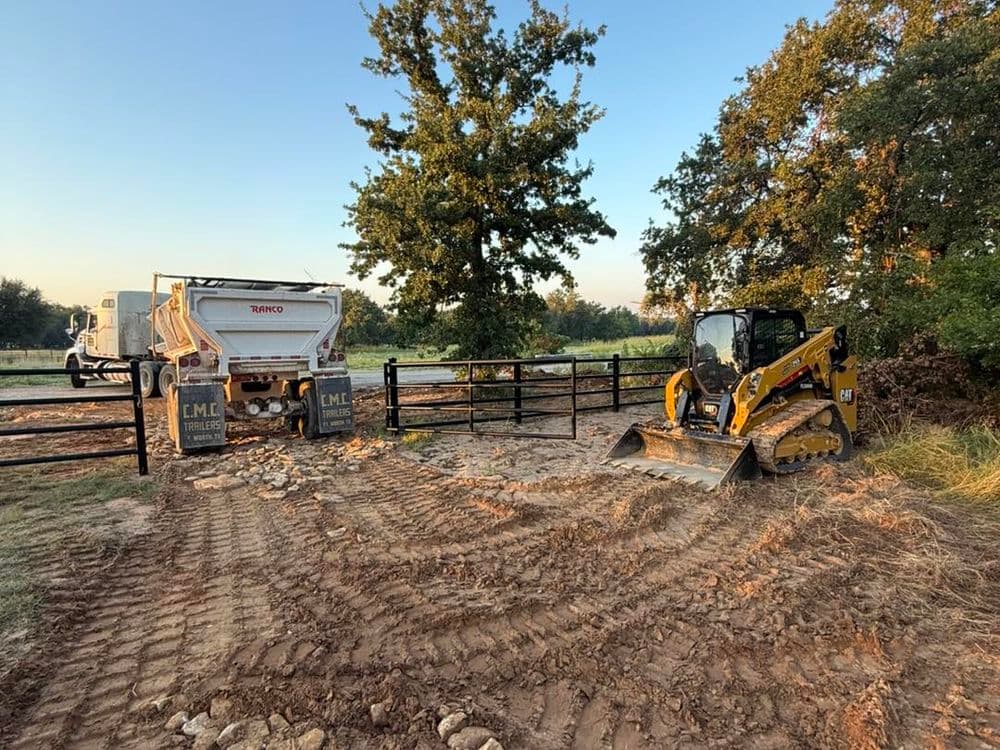
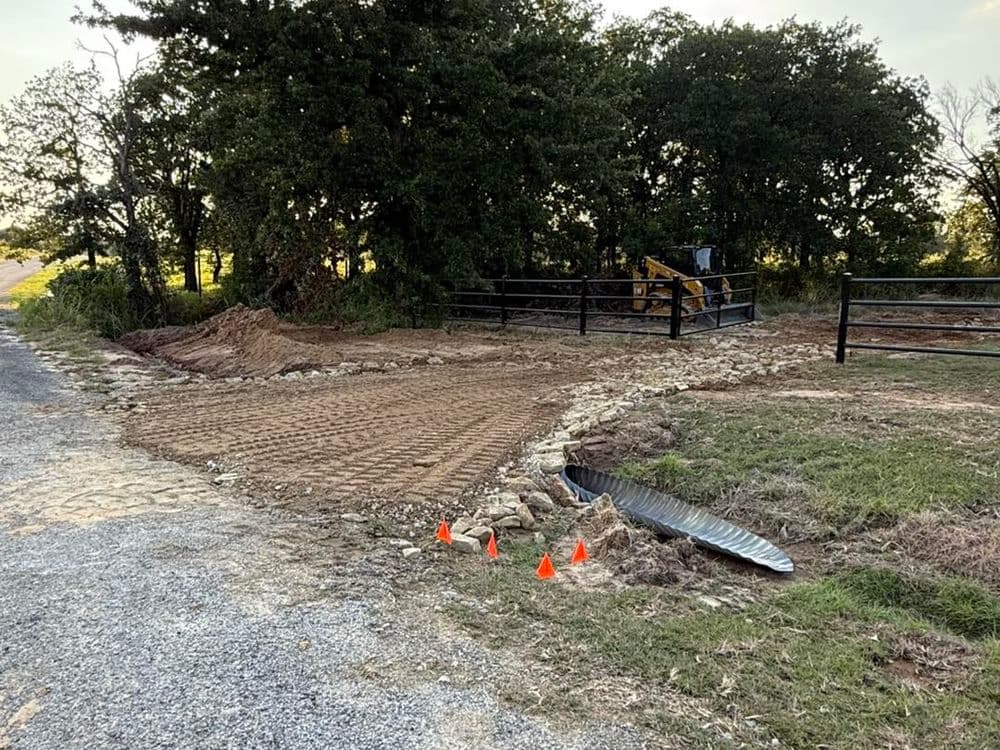
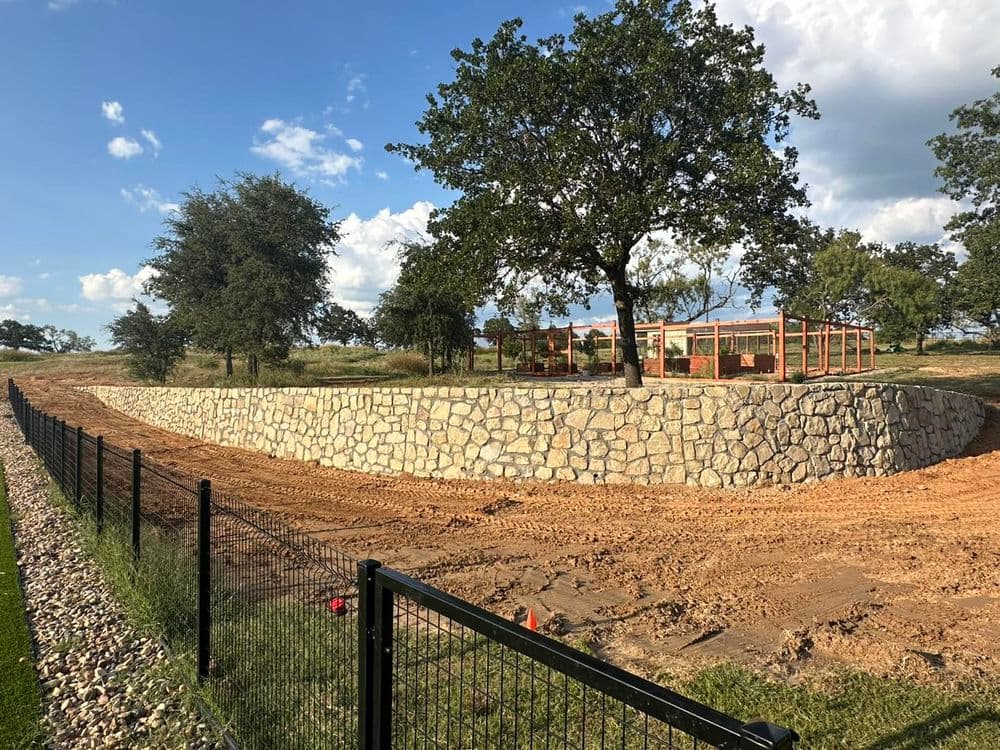
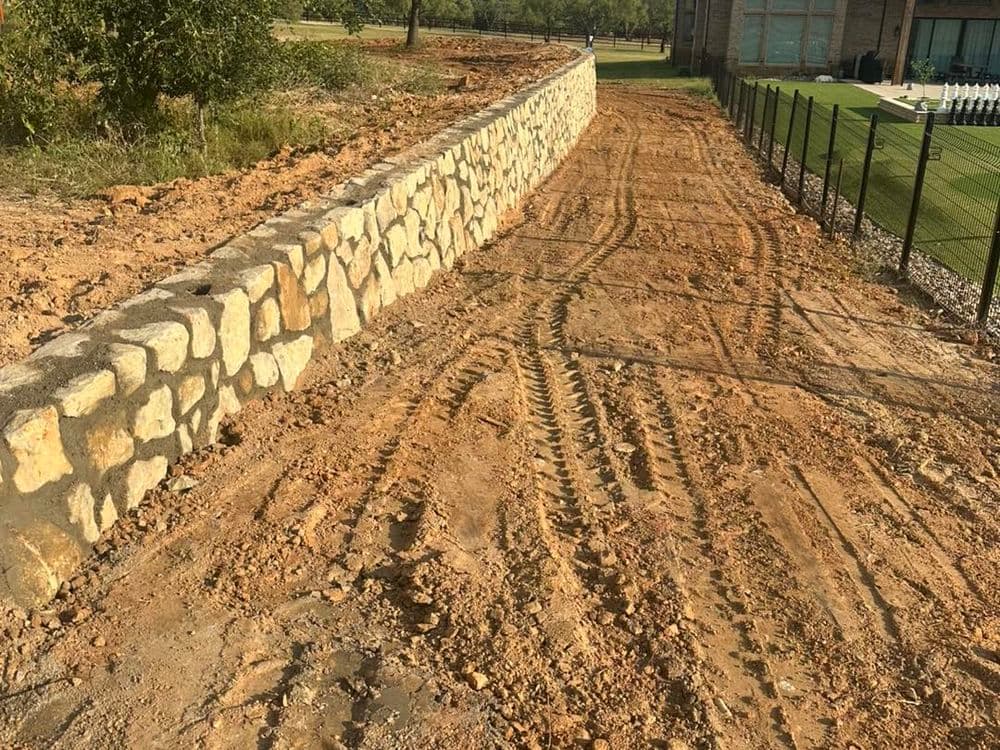
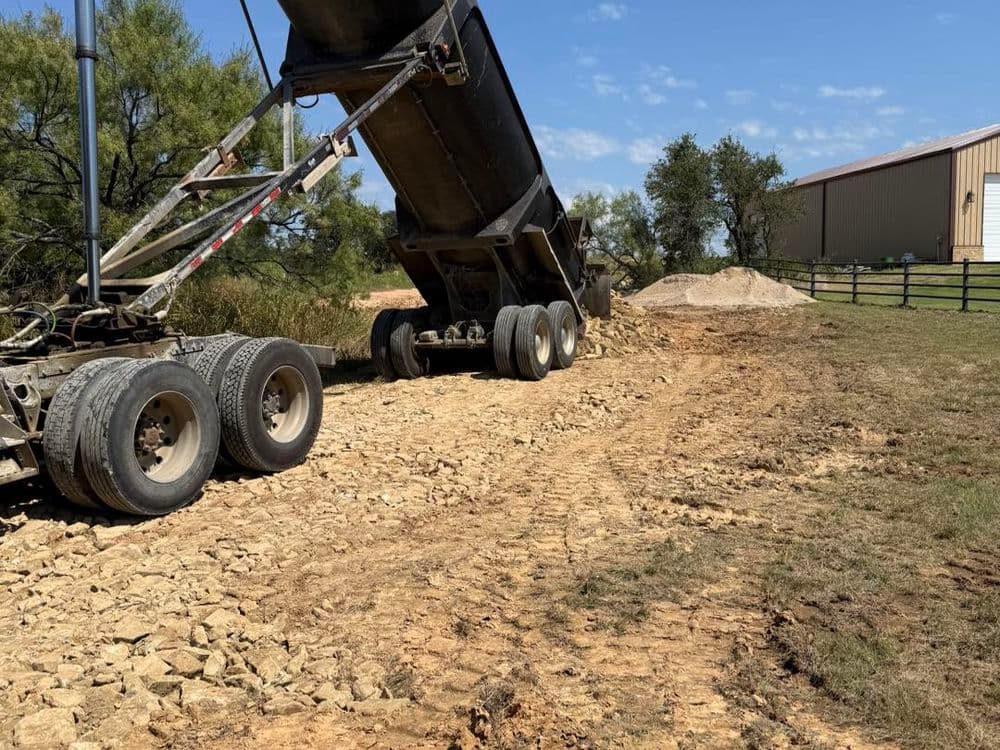
We started with the 455-foot gravel driveway. Sandy soil is the enemy of any gravel surface - it shifts, it sinks, and eventually the driveway just disappears into the ground. Our fix was to install a 3x5 rock base layer first, then top it with premium gravel. That base layer is what makes this driveway a lifetime investment instead of a recurring expense. At the entrance, we set a 24-foot culvert to handle heavy rain runoff before it ever gets the chance to wash out the road. The rock base going in is visible during the work - tight, compacted, and built to take load. Then we tackled the 155-foot engineered rock retaining wall. This wasn't a decorative stack. Every stone was placed with structure and long-term stability in mind. It holds grade along the driveway corridor and ties the entire layout of the property together. Clean lines, tight fit, and built to last.
Finally, we lined 285 feet of creek with rip rap - heavy angular rock placed strategically to slow water velocity, stop bank erosion, and give the creek a clean, controlled edge. Rip rap done right doesn't just solve the erosion problem, it blends into the landscape naturally so it doesn't look like a patch job.
Jobs like this one are why we do what we do. Large rural properties in the Fort Worth and Parker County area come with real drainage and soil challenges that require more than a basic dirtwork crew. When all four pieces of this site came together, the result speaks for itself.